Flat Roof Insulation – What You Need to Know
Commercial Roofing · Aug 6, 2026
Flat Roof Insulation – What You Need to Know
Flat roofs utilize insulation for slope and drainage. Reveal how flat roof insulation works and helps property owners protect their structure.
Commercial and residential flat roofs offer excellent durability and modern appearance, but they require careful design to perform properly. Without adequate insulation and proper drainage, a flat membrane roof can experience excessive heat transfer, standing water, higher utility bills, premature membrane deterioration, and costly repairs. Understanding how flat roof insulation works helps property owners protect their investment while improving energy efficiency and extending roof lifespan.

New Image Roofing Atlanta gathered essential information on flat roof insulation systems, membrane roofing assemblies, tapered insulation, drainage design, and preventive maintenance practices, helping commercial and residential property owners maximize roof performance. This guide explains why insulation plays a critical role in flat roofing systems, when tapered insulation becomes necessary, and how routine maintenance protects your roofing investment for many years.
Key Takeaways for Flat Roof Insulation
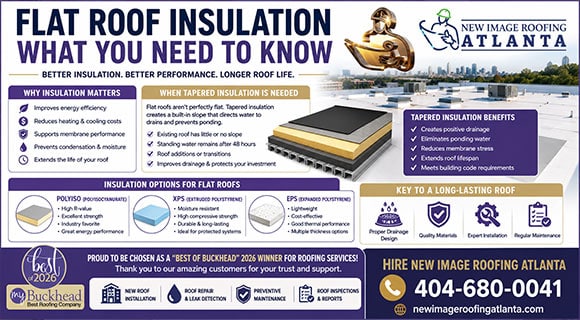
Flat membrane roofing systems depend upon much more than a waterproof membrane. Beneath TPO, PVC, EPDM, modified bitumen, or built-up roofing lies an insulation system that performs several critical functions. Proper insulation improves energy efficiency, increases occupant comfort, supports membrane performance, and creates positive drainage across roof surfaces.
Unlike steep-slope roofs that naturally shed water, flat roofs rely upon carefully engineered slopes that direct rainwater toward drains, scuppers, or gutters. Since most flat roofs are not completely level, roofing professionals create subtle slopes using tapered insulation systems. These systems reduce standing water while protecting roofing materials from premature deterioration.
Modern insulation products also increase compressive strength beneath roofing membranes. Strong insulation boards provide a stable substrate that resists foot traffic, rooftop equipment loads, and weather-related movement.
Energy performance remains another major advantage. Well-insulated roofing systems reduce heat entering buildings during summer while minimizing heat loss during winter. Lower HVAC demand frequently results in reduced utility costs throughout a building’s lifetime.
Choosing proper insulation thickness depends on several factors, including local building codes, climate zone, roof design, occupancy type, and energy-efficiency goals. Professional roofing contractors evaluate each project individually before recommending appropriate insulation values.
Another important takeaway involves preventive maintenance. Even high-quality roofing systems require periodic inspections to identify damaged flashing, punctures, loose seams, clogged drains, deteriorated sealants, or ponding water. Early repairs often prevent expensive structural damage later.
Finally, installation quality remains just as important as material selection. Proper fastening methods, correctly installed vapor barriers when required, compatible membrane systems, and accurately designed drainage plans all contribute to long-term roofing success.
Why Flat Roof Insulation Is Crucial
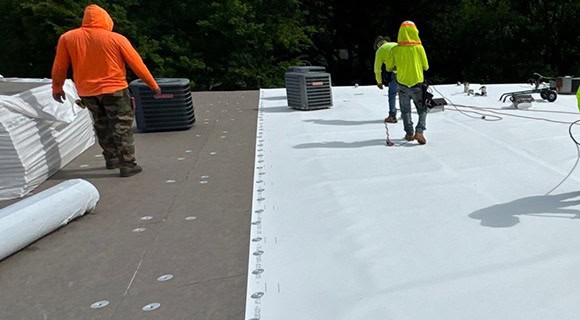
Flat roof insulation serves several purposes beyond improving thermal performance.
Proper insulation helps:
- Improve energy efficiency
- Reduce heating and cooling costs
- Increase occupant comfort
- Protect roofing membranes
- Support the roof structure
- Reduce condensation
- Improve drainage design
- Extend roof lifespan
Without adequate insulation, interior temperatures become difficult to control, and roofing materials experience greater thermal movement during changing weather conditions.
Typical Flat Roof Insulation Materials
Several insulation products perform well beneath membrane roofing systems.
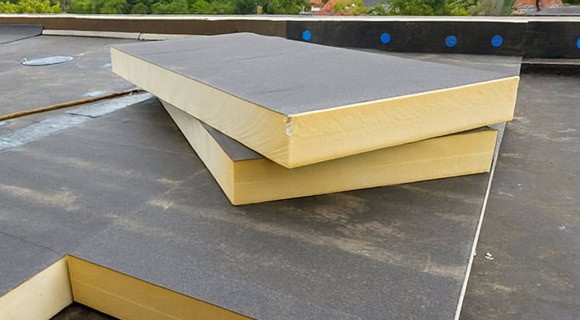
Polyisocyanurate (Polyiso)
Polyiso remains one of the preferred insulation products because it provides excellent thermal resistance while maintaining relatively lightweight construction.
Benefits include:
- High R-value
- Excellent compressive strength
- Compatible with multiple membrane systems
- Widely accepted by roofing manufacturers
Extruded Polystyrene (XPS)
XPS performs well where moisture resistance is particularly important.
Advantages include:
- Water resistance
- Strong compressive strength
- Durable performance
- Suitable for protected membrane assemblies
Expanded Polystyrene (EPS)
EPS offers economical insulation for many roofing applications.
Benefits include:
- Lightweight installation
- Good thermal performance
- Cost-effective pricing
- Multiple thickness options
Why Flat Roofs Need Positive Drainage
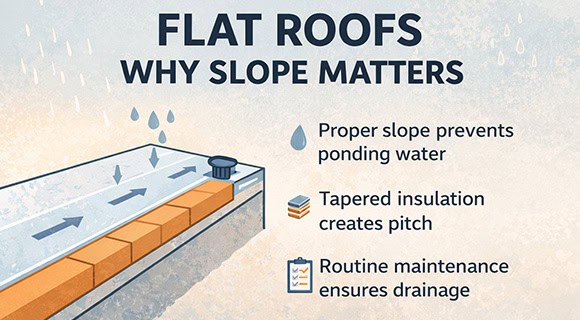
Despite their name, flat roofs are rarely perfectly flat.
Building codes require positive drainage that removes rainwater within a reasonable period after rainfall ends. Standing water places unnecessary stress on roofing systems, increasing the potential for leaks.
Proper drainage protects:
- Roofing membranes
- Roof decking
- Structural framing
- Insulation
- Interior finishes
Poor drainage significantly shortens roof lifespan.
What Is Tapered Insulation?
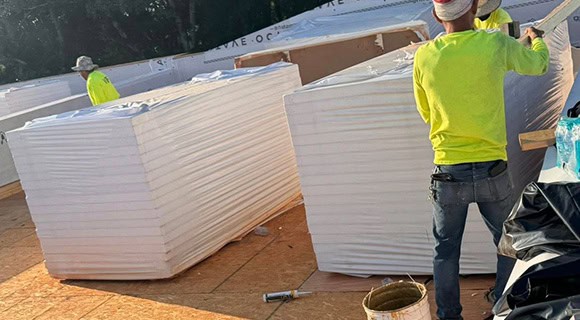
Tapered insulation consists of specially manufactured insulation boards that gradually change thickness across roof surfaces.
Rather than remaining uniform, these panels create subtle slopes directing water toward:
- Interior roof drains
- Scuppers
- Gutters
- Downspouts
Typical roof slopes created through tapered insulation include:
- 1/8 inch per foot
- 1/4 inch per foot
- Custom-engineered slopes
Although nearly invisible from ground level, these slight elevations dramatically improve water movement.
When Tapered Insulation Kits Are Necessary
Tapered insulation kits become valuable whenever existing roof structures cannot provide adequate drainage.
Common situations include:
Existing Flat Roof Renovations
Older buildings frequently contain little or no slope. During reroofing projects, tapered insulation creates proper drainage without major structural reconstruction.
Persistent Ponding Water
Standing water in place for more than 48 hours typically indicates drainage problems.
Tapered insulation redirects water toward drainage points while reducing ponding.
Roof Additions
Building additions often create elevation differences requiring custom drainage design.
Tapered insulation transitions roof elevations smoothly while maintaining proper watershed.
Energy Efficiency Upgrades
Many reroofing projects combine additional insulation with new tapered systems that improve both drainage and thermal performance simultaneously.
How Tapered Insulation Improves Watershed
Roofing professionals commonly use the term “watershed” to describe how rainwater travels across roof surfaces toward drainage points.
Proper watershed design helps:
- Eliminate ponding
- Reduce membrane stress
- Minimize algae growth
- Improve drainage speed
- Extend roof lifespan
Computer-generated layout drawings often determine the exact placement for each tapered insulation panel before installation begins.
Membrane Roofing Systems That Benefit from Proper Insulation
Most modern flat roofing systems utilize insulation beneath waterproof membranes.
These include:
TPO Roofing – TPO combines excellent energy efficiency with durable welded seams.
PVC (Duro-Last) Roofing – PVC performs exceptionally well around restaurants and facilities exposed to grease or chemicals.
EPDM Roofing – EPDM provides dependable long-term waterproof protection while accommodating building movement.
Modified Bitumen – Modified bitumen remains popular because it combines durability and flexible installation methods.
Built-Up Roofing – BUR systems continue serving many commercial facilities where multiple waterproof layers remain desirable.
Each system performs best when supported by properly designed insulation assemblies.
New Image Roofing Atlanta Roof Maintenance Contract
Even premium roofing systems require regular maintenance. Small punctures, clogged drains, deteriorated sealants, and loose flashing will become expensive repairs when ignored.
A New Image Roofing Atlanta Roof Maintenance Contract helps protect commercial roofing investments through scheduled inspections and preventive maintenance services. Experienced roofing professionals inspect membrane seams, flashing, rooftop penetrations, insulation performance, drainage systems, roof-mounted equipment, and surrounding components while identifying concerns before they become significant problems.
Maintenance services may include:
- Scheduled roof inspections
- Drain and scupper cleaning
- Minor membrane repairs
- Flashing inspections
- Seam evaluations
- Sealant replacement
- Debris removal
- Storm damage assessments
- Detailed maintenance reports
Routine maintenance extends roof lifespan while helping property owners avoid costly emergency repairs.
Hire New Image Roofing Atlanta 404-680-0041
When selecting a commercial roofing contractor, experience and workmanship make a significant difference. New Image Roofing Atlanta specializes in flat membrane roofing systems, including TPO, PVC, EPDM, modified bitumen, and built-up roofing. Their experienced team designs insulation systems that improve drainage, maximize energy efficiency, and support long-term membrane performance.
New Image Roofing Atlanta proudly earned recognition as the “Best of Buckhead” 2026 Winner for Roofing Services, reflecting a strong commitment to quality craftsmanship, dependable customer service, and professional roofing solutions throughout Metro Atlanta.
Whether your property requires new roof installation, tapered insulation design, roof replacement, leak repair, preventive maintenance, or emergency roofing services, New Image Roofing Atlanta delivers customized solutions designed for lasting performance.

For a free commercial roof inspection or estimate, call New Image Roofing Atlanta at 404-680-0041 or visit newimageroofingatlanta.com.
Insulation for Commercial Flat Roofs
Flat roof insulation plays a critical role in energy efficiency, membrane protection, drainage performance, and long-term roof durability. This guide explained why insulation remains essential beneath membrane roofing systems, how tapered insulation improves watershed, when tapered insulation kits become necessary, and why preventive maintenance protects commercial roofing investments.
Property owners who invest in properly designed insulation systems enjoy lower utility costs, improved indoor comfort, better drainage, longer membrane life, and fewer unexpected roofing repairs. Working with experienced roofing professionals further ensures that insulation and drainage systems perform exactly as intended throughout many years.
Ignoring insulation performance, drainage design, or routine maintenance can lead to standing water, premature membrane failure, interior leaks, structural damage, mold growth, and expensive repairs. Taking a proactive approach today helps protect your building, your occupants, and your investment well into the future.
Atlanta, GA 30318
(404) 680-0041
Schedule your free roof inspection
Free inspections and estimates — we’ll be in touch within 24 hours.