TPO or PVC (Duro-Last): What’s the Difference?

Choosing a commercial roof can become confusing when two popular membrane systems appear to offer similar benefits. TPO and PVC both provide durable single-ply protection. However, differences in chemistry, chemical resistance, installation, cost, and application can affect which system is best for your building. Understanding those differences can help you avoid an expensive mismatch and select a membrane suited to your property.

New Image Roofing Atlanta gathered information about TPO and PVC roofing to help commercial property owners, facility managers, and building decision-makers compare these two systems. This guide explains where TPO performs well, why PVC – particularly Duro-Last – is desirable for demanding commercial and industrial applications, and why qualified installation and maintenance support matters for long-term roof performance.
Key Takeaways for Differences Between TPO and PVC Roofing

TPO and PVC are both thermoplastic single-ply membranes designed primarily for commercial low-slope and flat roofing systems. Both can use heat-welded seams, creating strong, watertight connections when properly installed. Both are available in reflective colors, including white, which can help limit heat absorption and support energy efficiency during hot weather. However, similar construction does not mean these membranes are interchangeable for every building.
TPO, short for thermoplastic polyolefin, has become a popular choice because it combines performance with a competitive installed cost. It offers flexibility, resistance to ultraviolet exposure, heat, weathering, and fungal growth, while heat-welded seams provide strong connections. TPO can be a practical selection for warehouses, office buildings, retail properties, schools, manufacturing facilities, and other commercial structures that need general-purpose low-slope protection. It can also make sense when project budget, installation speed, and broad commercial performance are major considerations.
PVC, short for polyvinyl chloride, offers many similar benefits while providing additional resistance to certain chemicals and demanding environmental conditions. PVC can be especially useful where roof exposure includes grease, oils, industrial chemicals, or other substances that may challenge another membrane. Its heat-welded seams create a continuous watertight surface, and its resistance to weathering and ultraviolet exposure makes it attractive for long-term commercial use.
Duro-Last takes PVC roofing a step further with custom-fabricated systems. Many components can be prepared in a controlled manufacturing environment before going to a jobsite, helping reduce field seams and installation variables. Duro-Last systems are designed for flat and low-slope applications and are used across commercial and industrial facilities.
The most important takeaway is that neither membrane automatically wins every project. A qualified roofing professional should evaluate roof slope, drainage, existing materials, insulation, rooftop equipment, foot traffic, chemical exposure, wind requirements, building use, budget, and long-term maintenance expectations before recommending TPO or PVC.
What Is TPO Roofing?
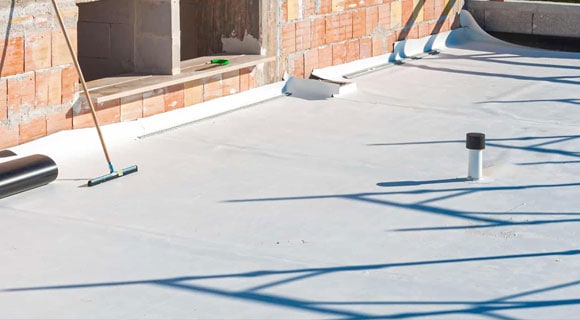
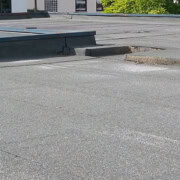
TPO is a single-ply thermoplastic membrane made from a blend designed to provide flexibility and resistance to environmental exposure. Roofing crews commonly install TPO over commercial buildings with low-slope or nearly flat roof configurations. Systems may be mechanically attached or adhered, depending on project design.
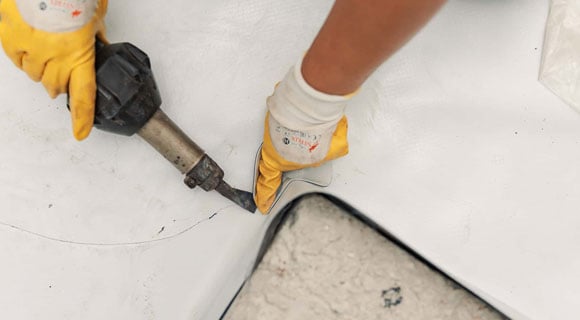
TPO provides excellent resistance to sunlight and heat, making it well suited for Georgia’s hot summers and changing weather conditions. White TPO can reflect substantial solar radiation, which may help reduce rooftop heat gain.
TPO is most appropriate when a building needs a reliable commercial membrane that balances performance and project cost. Warehouses, retail buildings, offices, schools, and general manufacturing facilities can be good candidates. It can also be considered for roof replacement or recovery projects when existing conditions support a membrane installation.
What Is PVC – Duro-Last Roofing?
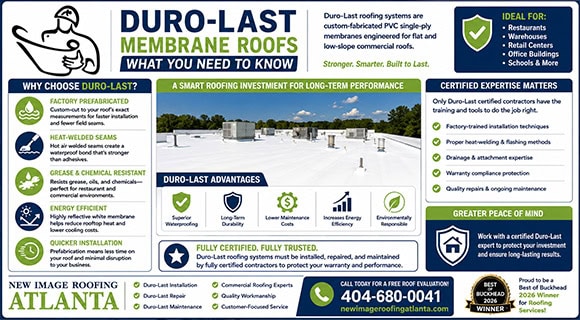
PVC roofing is another thermoplastic single-ply system. Duro-Last is a well-known PVC roofing manufacturer specializing in custom-fabricated commercial roofing systems. Duro-Last describes its flagship PVC membrane as highly reflective, durable, resistant to multiple chemicals, and suitable for flat and low-slope applications.
What makes Duro-Last particularly desirable is its custom fabrication approach. Measurements and details can be prepared before materials arrive, which reduces the amount of field fabrication required. Factory-welded components can also reduce field seams and help simplify installation.
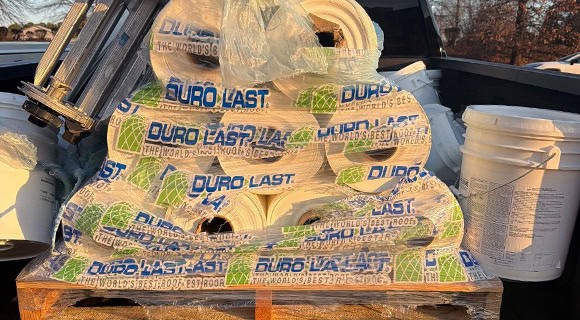
PVC can be a strong choice for restaurants, food-service buildings, manufacturing facilities, warehouses, industrial properties, and other structures where chemical exposure or demanding rooftop conditions are concerns. Grease, oils, and some chemicals severely damage roofing membranes, so PVC’s chemical resistance can be an important selection factor.
Another advantage is seam integrity. Heat welding can create durable membrane connections, helping form a watertight roof assembly. Duro-Last also provides specialized support through its authorized contractor network.
Installers and maintenance crews working on Duro-Last systems should be Duro-Last authorized and trained. This matters because membrane installation, seam welding, flashing, detailing, inspections, and warranty-related maintenance require system-specific knowledge. Duro-Last recommends authorized contractors for maintenance and identifies inspection requirements tied to certain warranties.
New Image Roofing Atlanta Roof Maintenance Solutions

A commercial roof should not be a set-it-and-forget-it asset. Preventive maintenance can detect membrane problems, drainage issues, debris, punctures, flashing concerns, and rooftop damage before those conditions become larger repair projects.
Duro-Last recommends routine inspections and maintenance, including at least two visual inspections each year, with additional attention after storms, hail, high winds, construction activity, or other events that could affect a roof.
New Image Roofing Atlanta provides commercial roof maintenance solutions designed to help building owners protect long-term roofing investments. This approach can include scheduled inspections, documentation, minor repairs, drainage checks, membrane condition reviews, and attention to rooftop penetrations and equipment.
New Image Roofing Atlanta is also one of fewer than a dozen certified Duro-Last roofing contractors in Georgia, according to its Duro-Last service page. That distinction can be especially valuable for commercial owners who want a contractor familiar with Duro-Last installation, repair, and maintenance requirements.
Routine professional care can extend useful service life, help protect warranty requirements, and reduce the chance that a small defect becomes an interior leak or major business interruption.
Hire New Image Roofing Atlanta 404-680-0041
Choosing between TPO and PVC is only one part of a successful commercial roofing project. The contractor responsible for inspection, design, installation, repair, and maintenance also impacts long-term results.
New Image Roofing Atlanta serves residential and commercial customers throughout Metro Atlanta, providing commercial roofing services like TPO, PVC, EPDM, modified bitumen, and built-up roofing systems. The company also offers commercial inspections and estimates.
New Image Roofing Atlanta also earned recognition as a “Best of Buckhead” 2026 Winner in Roofing Services because of its commitment to quality workmanship, customer service, and professional roofing expertise after hundreds of nominations and thousands of votes.
New Image Roofing Atlanta is an accredited A+ Rated roofing contractor.
For a commercial roof inspection, repair assessment, maintenance discussion, or replacement estimate, call New Image Roofing Atlanta at 404-680-0041.
Commercial and Industrial TPO or PVC Roofing Systems
Understanding TPO and PVC makes it easier to see why both membranes have an important place in commercial roofing. TPO offers a strong combination of flexibility, weather resistance, heat-welded seams, and cost-conscious performance. PVC – particularly Duro-Last – provides additional chemical resistance, custom fabrication, and specialized performance for demanding commercial and industrial environments.
Selecting the right membrane and partnering with a qualified contractor can produce a more dependable roof, better maintenance planning, fewer unexpected repairs, and greater confidence in long-term building protection. A professional evaluation can match membrane selection with actual rooftop conditions rather than relying on a one-size-fits-all recommendation.
Ignoring membrane differences or delaying maintenance can produce the opposite result. Poor material selection, improper installation, missed maintenance issues, or unqualified repairs can contribute to leaks, premature membrane deterioration, interior damage, operational disruption, and unnecessary replacement costs.
Atlanta, GA 30318
(404) 680-0041